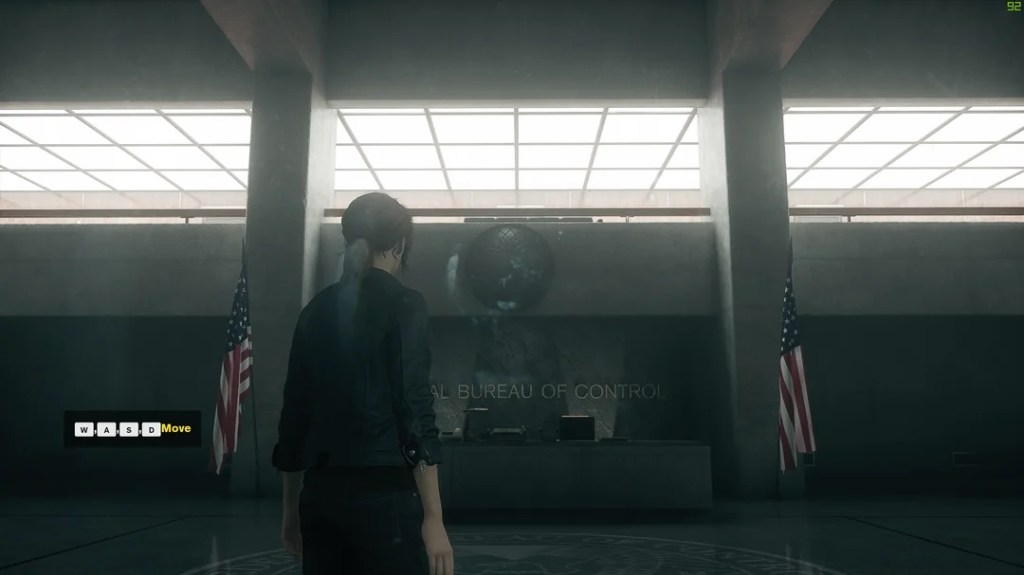
- Year Originally Released: 2019
- Version Played: Control Ultimate Edition
- Platform/Hardware: Xbox Series X
- Game Genre: Action-adventure
- Player Perspective: Third person
- Hours Played: 38 (one playthrough)
- Achievements: 90% (60/67)
- Gamerscore: 91% (1,270/1,390)
- My Favorite Thing: Combat mechanics
- My Least Favorite Thing: Enemy difficulty balance
Contains minor spoilers
Why I Started It
Control was released in 2019, and from what I remember, there was a decent amount of fanfare because of it’s association with the Alan Wake universe. Those were still the relatively early days of Game Pass (launched in June of 2017), so Microsoft made a big deal of a day one release on that service.
However, I didn’t particularly enjoy my time with the original Alan Wake game, so Control was added to and removed from the To Play group on my Xbox multiple times until a couch co-op friend recommended it in early autumn of 2024. Not only was it still on Game Pass, but it was the Ultimate Edition (included all DLC).
Story
You load in as Jesse Faden as she enters a building with 60s era government agency vibes. An alarm sounds, and the facility is locked down. You explore the building, aided by a presence that seems to be in your head and guides you to important waypoints. You are almost immediately given the title of Director and tasked with clearing the agency of an invasion of unknown origin.
It quickly revealed that Jesse has been looking for this place for most of her life. She was present during an event that caught the attention of the agency (officially the Federal Bureau of Control), and her brother was swept up by agents. So while she is battling through the The Oldest House (the in-house name for the building) trying to get things back under control, she’s also trying to find out what happened to her brother.
I never felt any real level of investment in the story or the main character. The only reference to Jesse’s life prior to the game are references to the event and fleeting clues that show the agency has been tracking her ever since. I don’t know what she did for a living, what she does for fun, whether she has a partner, whether her pursuit of her brother was all-consuming or a side project, if she lost anyone else in the event, or pretty much anything else about her. As a result, she feels very one-dimensional, and combined with a pretty simple overall narrative, I never really cared whether she found her brother or answered any of the questions she kept asking herself. The best way I can explain it is I never believed she existed outside of the walls of this building.
Gameplay
The general gameplay goal is to clearing areas of the building to lift the lockdown. Go to that place, clear minor enemies, and hit the button/grab the item/kill the boss. There are “here’s the head of that department” details, but it’s the same wall with different paint.
Gear and character progression loops involve:
- Completing main story tasks to receive unique weapon forms, combat abilities, and ability points to upgrade those abilities. You technically only get one weapon, but in practice, the various unlocked forms are different weapons. There are standard forms (automatic rifle, sniper rifle, shotgun, rocket launcher) as well as some fairly unique hybrids.
- Collecting character and weapon mods. These can be picked up from the dozens of loot boxes scattered around and are also dropped by enemies you kill.
- Using a variety of collected resource types to upgrade weapon forms and craft semi-random character and weapon mods.
Early in the game, level design is a little frustrating. It often feels like spaces are too open/vertical in a way that gives enemies an advantage, and some collectibles are simply out of reach. There’s a reason: one of the abilities you acquire is levitate, which allows you to instantly shoot 15-20 feet in the air and stay there for several seconds. This introduces a recurring theme: while the level designs feel linear when you’re going through them the first time, a lot of the game involves going back to previous areas to do side quests or complete tasks for which you weren’t equipped when you originally cleared them.

Enemy respawn in cleared areas is…sporadic. Enemies are encountered rather frequently while clearing an area, but after that, you can run through large sections of the map without any combat. There are specific rooms/areas where enemies do respawn, but in smaller numbers and not with 100% reliability.
Combat
For me, this is by far the biggest draw of the game. Early on, it’s only OK: it will probably feel clunky to anyone who has played a good gun-centric third person shooter (Gears, Mass Effect, etc.). But once you get the combination of weapon forms and abilities that makes things click for you, it’s so much fun.
For me, it was the combo of Levitate, Launch, and Charge. As soon as enemies started spawning, I jumped up for a good tactical view, launched items at shielded enemies, then rained down a steady stream of overpowered explosives until the field was clear. Then things got even wilder as upgrades and mods allowed me to launch many more objects in a row (and even multiple at once), stay in the air a lot longer, and have the rocket launch act more like a railgun. There are many complementary combinations of abilities and weapons, and figuring out the ones you like most is its own fun.
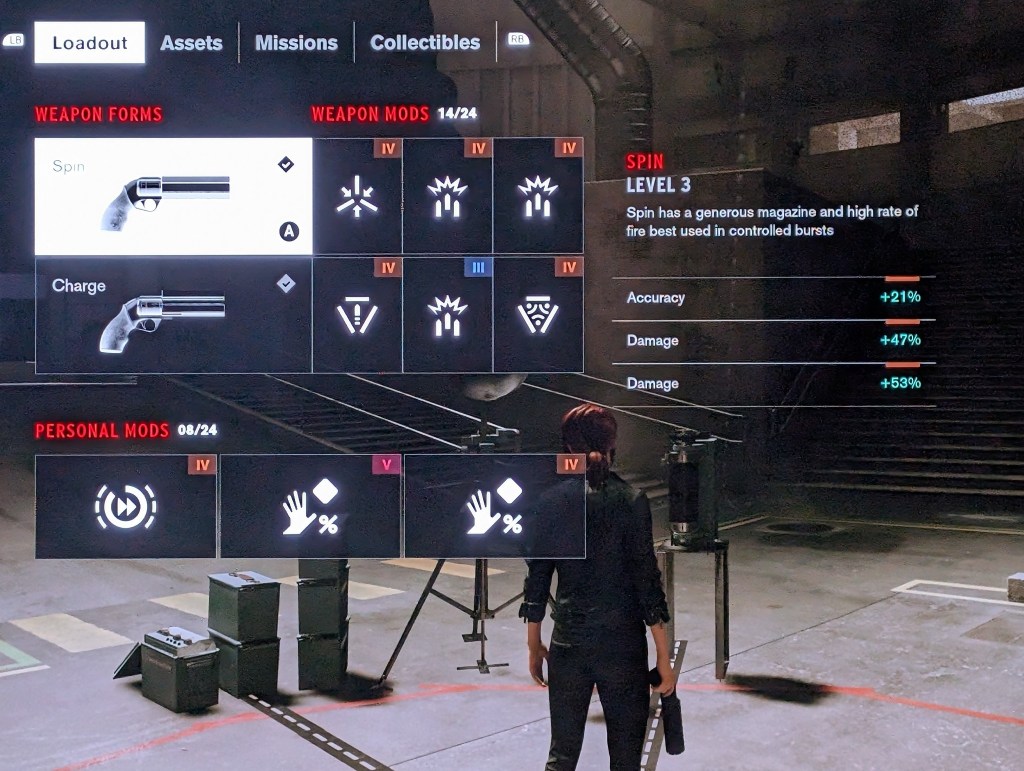
Some weapon mods are limited to certain forms, but many can be applied to all forms, and character mods can be applied in any combination. Weapon mods can be freely added/removed at any time, so you can try out different builds out in the field between fights instead of having to visit a checkpoint/base/whatever.
Balance
As much as I love the combat, unfortunately, a related aspect is easily my least favorite part of the game: balance. Like most games, you are fairly underpowered at the beginning of the game, but once you get a build going, upgrade your favorite weapons once or twice, and find some good mods, you can ignore basic combat tactics like cover and reload timing. After you max out the main abilities and fully upgrade your weapons, you start kicking down doors and running into rooms knowing you’ll be able to shred anything on the other side.
Except when you can’t.
I can’t remember another game that snapped so abruptly from “I AM A GOD!” to “Wait, what happened?” than Control. Starting about halfway through the main story, I felt almost laughably overpowered in almost all combat. But then a Distorted would materialize next to me and instantly vomit me down to a sliver of health. Or an Elevated would launch slivers of metal or stone into me while levitating halfway across a huge room with the same result. I understand that certain enemies should be more difficult than others, but when I can be a bullet sponge while levitating above half a dozen enemies during a fight, then get all but one-shotted by a random one in the corner, it’s jarring. I’d prefer the regular enemies be a little more difficult to keep me honest/tactical or the more powerful enemies be tamed down a little to match the vibe of 95%+ of combat.
Nowhere is this more apparent than boss fights. Long after the point when regular combat mostly consisted of me coming up with amusing ways to kill enemies, I would walk into a boss fight and die after getting hit twice. The first time it happened was a boss named Salvador, and I retried 5-7 times playing the encounter “straight,” moving between destructible cover and balancing attention between support enemies and chipping down the boss’s health. But no matter how cleanly I played, two shots killed me, and there was a lot going on. After stopping to think it through, I adjusted my build/mods and went back in with what I would consider a “cheese” approach: all Launch, don’t even bother with guns, ignore the support enemies, use the one indestructible item in the room to block the primary attack. It wasn’t fun, it wasn’t fulfilling, but I killed him on my second try.
After that, I treated the boss fights as annoyances to be endured rather than fun challenges. Between finding fight-breaking cover and keeping enough mods around to make hyper-specific builds, I found ways to cheese my way through all but one (I’ll cover that later).
Collectibles/Side Missions
There are literally hundreds of collectibles strewn about the main game and two DLCs. They range from correspondence between members of the FBC to recordings of interviews/meetings to notes on powerful altered items. I normally eat this kind of stuff up (I get excited every time I find a note in a Fallout game), but after reading the first few dozen, I stopped. There’s definitely some clever writing in some, but there’s also a lot of pretty mundane stuff, and the ratio wasn’t good enough for me to continue reading/listening. I only kept grabbing them to unlock achievements.
Side quests come in two types:
- Encounters. You come upon a situation and help someone or finish a task. This ranges from pretty standard video game fare (rescue the sole survivor from a recon team) to the fairly weird (relieving a person who has been staring at a refrigerator for many hours and will die if he stops).
- Jobs. You meet a character who gives you “cleaning” jobs that consist of killing/removing a certain number of enemies or items from an area.
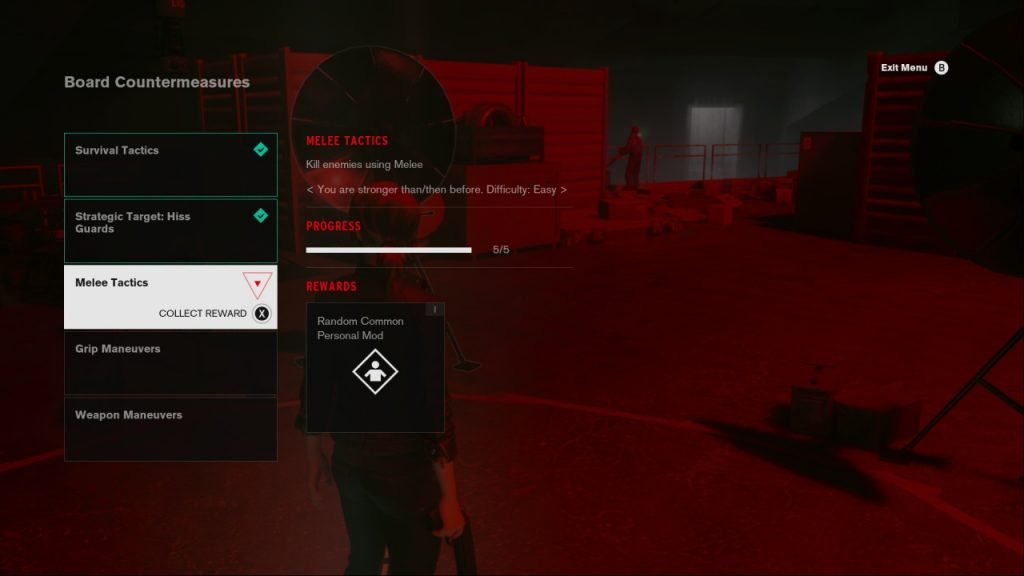
In addition to those, there are not-really-missions Board Countermeasures, which can be activated at control points (where you fast travel). They are semi-randomly generated, you can do an unlimited amount, and the rewards vary depending on the task.
Ending (major spoilers)
I thought things could go a few different ways to end the game. A showdown with Dylan was telegraphed pretty hard, but a villain turn by Polaris or an unexpected Hiss possession of a major character (Emily would be my pick, but Langston or Arish also would have worked) would have been interesting. Or something semi off the rails like a Hiss alpha somehow making it through the breach and having to fight them in various parts of the Oldest House with the assistance of other major characters.
Instead, interacting with the projector kicked off a literal multi-tier fight against increasingly difficult enemies (but wasn’t nearly as difficult as a couple of the earlier boss fights). This felt like a buildup for a big bad or at least a narrative turn. Maybe using the strongly-implied dimension shifting capabilities of the projector? Instead, after I got to the top, Hedron still died, and I got possessed and had to fight off the Hiss in Jesse’s mind. Which sounds cool, but the shift from fighting waves of semi-powerful enemies who have the high ground to literally making copies and picking up coffee cups went beyond jarring and became simply annoying. No combat later, I cleansed the projector and Dylan, but it caused him to go into a coma, robbing me of any closure for the only reason Jesse even walked into the building.
So I’m still Director, there are still Hiss around I need to clean up (even though I closed the portal), Polaris is still in my head, I took Hedron’s place(?), no other named character was in danger in the last mission, and I don’t know if my brother is braindead, insane, or just enormously traumatized. I get that the plan is to do more in the FBC/Alan Wake world, but I was quite surprised when the credits rolled. It seemed likely there would be one more combat mission or at least a few more cutscenes to clarify/close some of the major narrative beats.
DLC
The Foundation explores more of the FBC lore and what happened to recon teams who explored the…foundation of the Oldest House before Jesse’s arrival. You get two new combat/movement mechanics based on the subterranean setting. AWE is a direct tie-in to the Alan Wake games where the “Shadow” has taken over a researcher in the Investigations Sector (new with the DLC). You are tasked with clearing the area and eliminating the researcher. To do so, you frequently use the new Wake-esque light-as-a-weapon mechanic.
While a few new gameplay/combat elements and enemies were introduced, the DLCs played almost identically to the main game. Nowhere was this more true than the hardest fight of the game against Emil Hartman at the end of AWE (after I breezed through all the other enemies). Without giving away anything major, there’s a phase where both of these are true:
- You cannot damage Hartman
- Hartman regenerates health
After 30+ hours, this is the fight that caused me to find out if Assist Mode affects the ability to unlock achievements. After about 15 tries (getting very close 2-3 times), it was past midnight, so I enabled Immortality and played it straight. Based on my health meter, I would have died twice during the fight, but I was able to quickly gather health both times. I have zero guilt about it and frankly wish I would have used Assist Mode in earlier fights.
Things I Wish I Would Have Known
- Enabling Assist Mode does not affect the ability to unlock achievements. This is huge if you also find boss fights imbalanced enough to not be fun: turn up your health, decrease damage, or simply enable immortality, then play the encounter the way you enjoy.
- If you don’t like a specific Board Countermeasure mission, you can accept and immediately dismiss it. Another will generate at the bottom of the list. As far as I can tell, there is no limit.
- You can play the game as a pure shooter early on, but damage stats essentially require you to do something separate for shields and crowd control pretty quickly. I used Launch and Seize for those, respectively.
- Early in the game, you’ll find areas you take damage when entering because they’re glowing red or have multicolored fungus in them. Just keep playing to unlock the ability to enter them.
- If you find a doorway or other opening blocked by a glowing red barricade, find the 3-4 small red blobs nearby and shoot them in quick succession to destroy the barricade. Some of the blobs regenerate if you don’t get all of them fast enough.
- To drop an item you picked up with Launch (as opposed to launching it), hit the B button (Xbox).
- You can break down weapon and character mods for Source in your inventory menu.
- If you go into the details of various materials in you inventory, you can determine the sector where that material is dropped/present.
- Having a mod of a certain type/level in my inventory seemed to significantly decrease the chances of a similar-but-better one dropping. I suggest equipping the best ones for the weapons you’re using and breaking down lesser versions for Source. Only keep mods for alternate builds in your inventory.
- Despite crafting probably 12-15 mods, I think I only used one in the entire game. I got significantly better mods in drops the rest of the time, probably because I simply got far more mods overall that way.
- The blast radius for an upgraded Charge is already big. If you equip a mod to expand that radius, only use it for long-range targets in open areas.
- Hiss Distorted are mostly invisible, but leave a slight visual distortion in their wake. You can use explosive weapons to damage them and briefly make them visible.
- Using Spin to break a window enough to walk through it is often annoying since one tiny sliver can prevent you from going through. Charge or another explosive weapon aimed at the frame is much more efficient.
- When you need quick/easy kills, the best method I found was: from the Central Executive control point, head north on the ground floor and kill the enemies that spawn in the Cafeteria. Then go through the door in the northwest corner of that room to Dead Letters for more. These are all base-level enemies, though you’ll need to watch our for engineers with rockets.
Final Thoughts
Control is a game worth trying, especially if you have a Game Pass subscription or you can find it on deep discount (<$15 for the Ultimate Edition). If you love it, the commitment will still probably be less than 50 hours, and if you find it middling or even dislike it overall, you can use Assist Mode to adjust things to your liking without affecting your ability to unlock achievements. There are some engaging (and even funny) missions, but I didn’t find the story interesting or deep enough to become truly invested. Despite some of these flaws, the combat was fun and flexible enough to keep me going for almost 40 hours.
 Evening Latte
Leave a comment