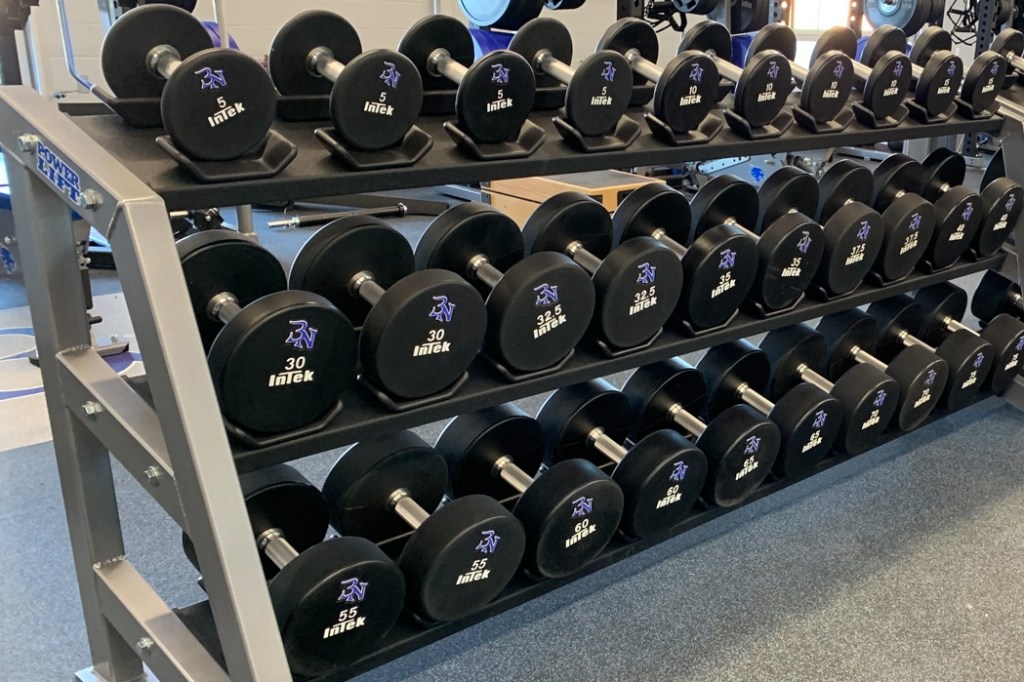
I started lifting weights in high school and have done it at least semi-regularly since. Back then, I was taught the traditional methodology of intensely targeting one or two muscle groups during each workout and rotating focus between trips. But during the pandemic lockdown, I read up on the ability of lower-intensity full-body workouts to effectively induce hypertrophy and was convinced enough to try it. Now that’s all I do. I think I get as good or better results with bonuses: it results in shorter workouts and less overall soreness/fatigue (for me).
To be clear: I’m not claiming my plan maximizes results. If I spent more time in the gym or did a wider variety of exercises, I could get better results. But I frankly don’t like strength training very much, and I’m not a model or professional athlete, so this is the balance I’ve found that prepares me for my hobbies (ultimate frisbee, biking, volleyball, etc.) and gives me a chance to pass the mirror test for a large portion of the year.
Safety
If you’ve never worked one-on-one with someone to check your form while lifting, that would probably be worth your time and money, both for safety and to make sure you’re actually working the muscles you’re intending. Most gyms offer complimentary intro time with a trainer to at least show you how to use all the machines.
Many trainers offer discounts for buying an initial set of sessions, though they will obviously suggest you buy more sessions at full price after that. If it makes sense from a financial perspective and you think you would benefit from having someone to keep you accountable and give you consistent input, you may consider it.
Alternately, if you’re open to guidance from someone you know, you can ask them to help you for a few sessions to get going. The workouts should obviously be at the gym you’ll be attending, so if that person isn’t a member, you’ll need to use guest passes or pay for them to go with you.
Workout Summary
AB1 Supersets
2x [Muscle Group A – Exercise 1] + [Muscle Group B – Exercise 1]
AB2 Supersets
2x [Muscle Group A – Exercise 2] + [Muscle Group B – Exercise 2]
CD1 Supersets
2x [Muscle Group C – Exercise 1] + [Muscle Group D – Exercise 1]
CD2 Supersets
2x [Muscle Group C – Exercise 2] + [Muscle Group D – Exercise 2]
EF1 Supersets
2x [Muscle Group E – Exercise 1] + [Muscle Group F – Exercise 1]
EF2 Supersets
2x [Muscle Group E – Exercise 2] + [Muscle Group F – Exercise 2]
Supersets
The idea of supersets is to avoid the traditional rests between sets. Instead, you go straight from one exercise to the other. This allows you to accomplish the same number of reps faster. I can normally complete the workout above in 30-35 minutes. It also means missing a day doesn’t affect your schedule: you’re already doing full-body every trip.
Example: for a chest/back superset, I do a set of dumbbell chest presses, then immediately walk to the pull-up bar and do a set. That’s a superset. No prescribed rest: as soon as I complete the pull-ups, I head back to the bench for another set of chest presses, then back to the pull-up bar. That’s two supersets.
Muscle Groups
During the offseason, I use the these general muscle groups:
- Chest
- Back
- Arms
- Abs
- Legs
- Shoulders
For superset purposes, I tend to combine them this way (example notations from the Workout Summary):
- [A]Chest/[B]Back
- [C]Arms/[D]Abs
- [E]Legs/[F]Shoulders
I like this because it avoids overlapping work within a superset. Example: if I were to combine chest/arms, I’d be working my triceps double since most chest exercises involve a pushing motion that also activates triceps, then I’d turn around and immediately do a triceps-focused exercise. At best, this causes my totals for both exercises to go down, and at worst, it causes instability that can lead to injury.
As I get into the club frisbee season and do multiple moderate-to-intense field workout/play days a week, I scale leg lifts back significantly and split arms into biceps and triceps. I’ll often do one overall leg lift (squat) or movement (push sled) per workout based on how they feel. You may also do this for a few days before and after something like a big hike/run/ride. Not allowing enough time for recovery is bad for your muscles and increases your risk of injury, especially if you’re doing full-speed reactionary directional changes (ultimate frisbee, soccer, flag football, etc.).
- Chest/Back
- Biceps/Triceps
- Shoulders/Abs
Exercises
There are far too many exercises to try to list here. Here are a few online resources you can use to look some up:
https://www.acefitness.org/resources/everyone/exercise-library/
https://www.muscleandstrength.com/exercises
https://www.bodybuilding.com/exercises
I generally prefer free weights over machines and dumbbells/kettlebells over bars because I think independently balancing weight during exercises slightly benefits joint stability. But make sure you figure out what all the machines in your gym do and integrate them if you think they accomplish something that is difficult or annoying to do with free weights (like a hip adductor/abductor machine).
Rotation
I like to adjust the rotation during the week to mix things up a little and avoid any usage/imbalance issues that might be caused by a static order.
- Monday
- Chest/Back
- Arms/Abs
- Legs/Shoulders
- Wednesday
- Arms/Abs
- Legs/Shoulders
- Chest/Back
- Friday
- Legs/Shoulders
- Chest/Back
- Arms/Abs
Rep Numbers
I swap between higher-weight/lower-reps and lower-weight/higher-reps every three months or so. My target low-rep count is 8, and my target high-rep count is 12. I almost always lift solo, so I don’t push to muscle exhaustion, just try to set weight so I feel somewhere around 80-85% fatigued at the end of each set. Exceptions:
- For most abs, pull-ups, and other body-weight exercises, I usually go to around 90% fatigue (could do one more rep, but probably with bad form).
- I keep lower-back exercises at 10 reps all the time and only push to about 70% fatigue.
- I’m very careful with both form and weight amounts for exercises that directly engage my lower back. I’ve known several people (including one retired semi-pro football player and one ex-bodybuilder) who attributed their chronic back issues to pushing too hard on those exercises. More on this later.
If you want to push to exhaustion during weighted movements for some reason, make sure you have a spotter.
Personal Notes
Reminder: I have no official training or qualifications. Like the rest of this post, these are my preferences and suggestions based on my personal experiences and advice from athletes/coaches/trainers I’ve known.
- If you haven’t already seen my previous post about gym etiquette, here you go. Don’t be that person.
- The superset methodology means the equipment you’re using is going to get taken between sets pretty frequently during busy gym times. That’s fine; be ready to subsitute similar exercises.
- Make sure you’re taking in enough protein to allow your body to efficiently recover. How much you need depends on who you ask, but I try to get 100g or more a day with an average body weight of about 185lbs. I should frankly be getting more, but this is me being honest. Getting that much through food alone is technically possible, but protein powder from high-quality, lab-tested companies is a great way to supplement your diet (40-50g of my daily intake is from whey powder). This has probably made the most difference of anything I’ve changed in my workout routine as an adult. Dymatize ISO100 is my preferred type, and it has the bonus of being hydrolyzed (removes essentially all lactose) for people who have problems digesting dairy. Optimum Nutrition Gold Standard is the other brand I rotate. A couple friends have recommended Orgain for a vegetarian/vegan option. Flavor preferences obviously vary between people.
- Hot take: I don’t do deadlifts. For many years, I rarely saw people doing them, but then they seemed to get really popular a few years ago. The cynic in me thinks it’s party because it’s relatively easy to put up big numbers. For regular people and recreational athletes, I think the related benefits can be accomplished more safely by doing stuff like back extensions (using a Roman chair without weight or a weighted machine), isometric exercises (like the many, many plank variations), and low-weight exercises like reverse wood chops with a kettlebell. If you decide to do deadlifts, have your form (including tempo) checked by someone who knows what they’re doing, keep the weight low, and consider using a belt.
- The squat is the best overall leg exercise, but it can also put a lot of stress on your lower back if you consistently lift near your max, even if you have good form. I personally only do 50% or even less of my max and focus on form and controlled explosion out of the crouch. Using a Smith machine (straight bar on vertical rails) or standing sled are also options to stabilize the movement and reduce overall load on your back.
- As of the publish date of this post, I am 42 years old. If you’re significantly younger than me, three things:
- Develop a strong weight training habit now. It’s one of the best things you can do to avoid injury during physical activities and extend good quality of life.
- You may be able to take on a harder workout load than me because you recover faster than I do. Good on ya; I remember those days.
- You should still consider heeding at least some of my cautions . As I mentioned, I’ve known a fair number of very athletic people whose intense workouts in their teens and 20s at least contributed to chronic issue that ended up affecting their daily quality of life.
 Evening Latte
Leave a comment