
To set the context: I have very little knowledge of plumbing. The extent of my experience is installing a standalone sink vanity and two toilets. Nothing in this post should be taken as authoritative, just my experience and (limited) understanding.
A tank gasket failed on one of my toilets, and after getting a quote from a plumber and talking to a few friends, I decided to replace the entire unit and install it myself. A bunch of research led me to a one-piece toilet (no tank-to-bowl gasket to fail, easier to clean) and the referenced Danco HydroSeat. After a little less than two years, I’m quite happy with both.
For anyone who is fortunate enough to have never seen what’s under a toilet, they’re connected to the waste drain pipe via a flange. It’s the pipe end in this picture.
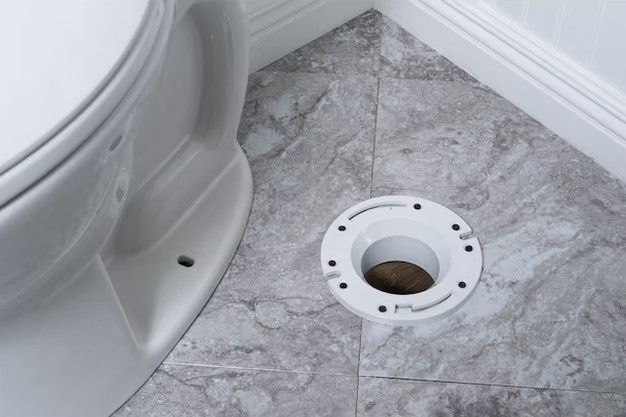
It’s common to add a reinforcing galvanized metal ring on top.
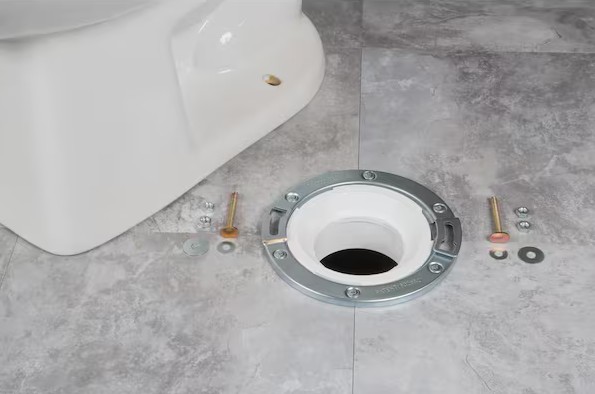
A wax ring is placed on top of the flange/ring, and when the toilet is lowered into place, it compresses the wax, making a waterproof and airtight seal.
The reason a reinforcing metal ring is good (some would say required) is that the slots on the side of the flange are the attachment point for the bolts that hold the toilet to the floor. Gravity obviously plays its part, but lateral force is absorbed by those bolts.
That seemed bonkers to me since it puts the stress of toilet stabilization on a piece of plastic, and even worse, the same piece of plastic that is responsible for maintaining the seal. While researching, I kept expecting to find the “modern” way of doing it, partially because everyone seemed to simply accept that flanges will eventually fail. When that happens, a reinforcing ring can often keep things stable, but gaps can open up and let water get to the surrounding subfloor. In worse scenarios, the failure of one bolt puts additional stress on the other, which also eventually fails. At that point, the toilet can shift enough to affect the flange seal (causing leaks) or even noticeably lean with someone on it.
When I read about the HydroSeat, it made sense to me. A steel platform is screwed onto the subfloor to secure the toilet, and the flange can just be a drain pipe. The kit had a bunch of positive reviews on the usual home improvement sites, so I decided to give it a shot.
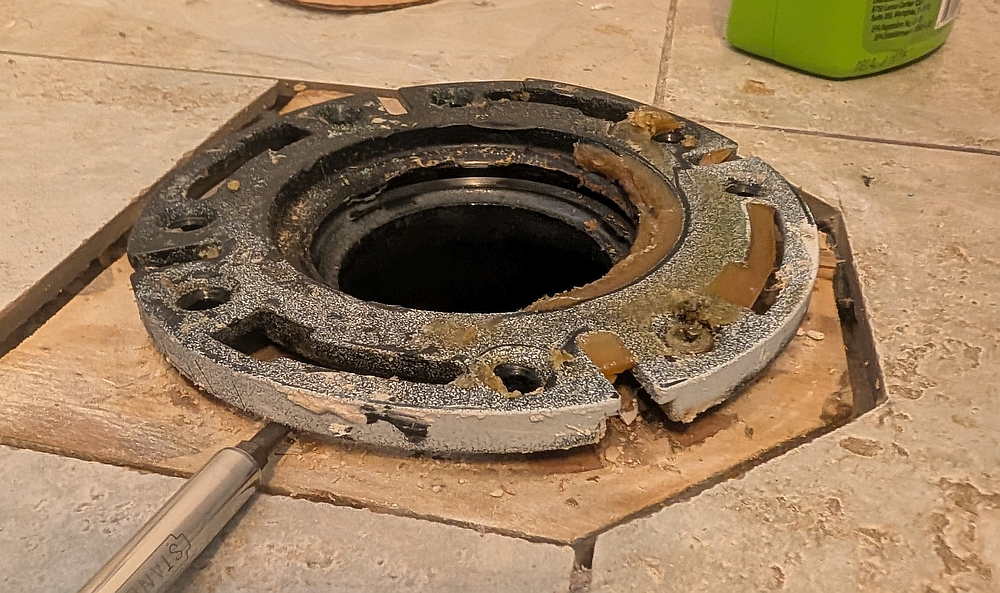
This is the old flange after I cleaned out some of the wax. The original plumber installed everything on a wood pedestal so it would be roughly flush with the tile. It failed about nine years after construction. As is apparently pretty common, the upper/ring part of the flange partially cracked. The screwdriver is showing how much the ring could be lifted up. This meant the toilet was no longer solidly attached to the floor.
When I called a plumber out, they gave me a quote to tear out the subfloor and replace enough of the waste drain pipe to install a new flange. I think it was around $1,500, and just like any significant home project, it carried the risk that something would be missed/done incorrectly during demo or rebuild. On the other hand, the HydroSeat can simply be installed on top of the existing flange.
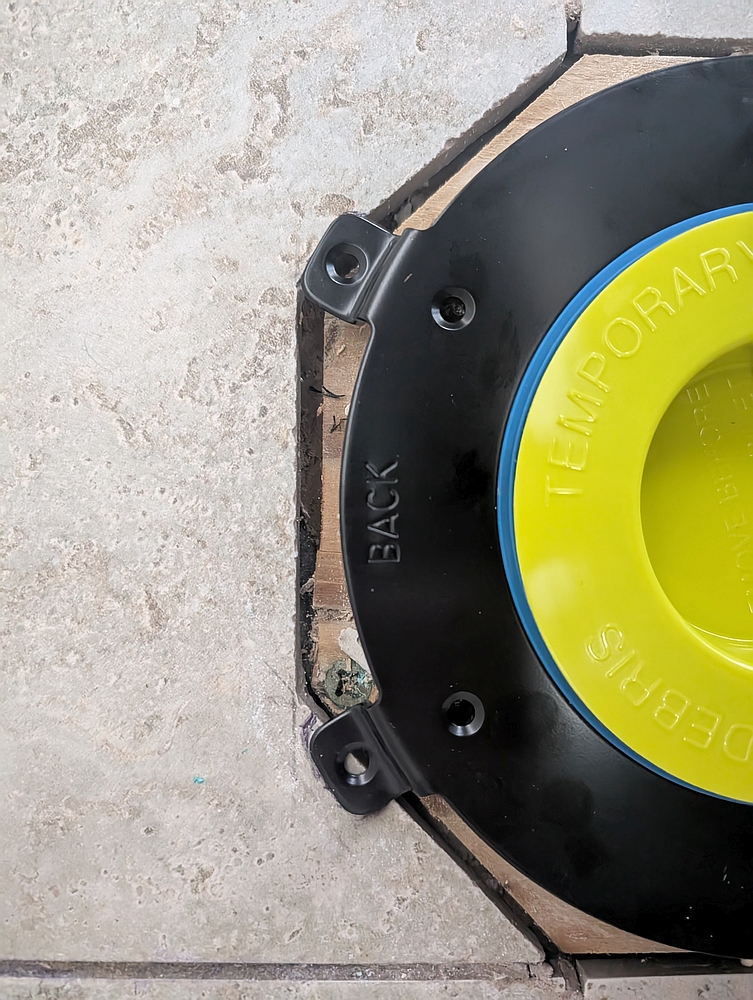
Unfortunately, because the tile cutout was only large enough for the pedestal, the legs for the platform didn’t fit. Thankfully, I own a Dremel, and after some work with my face too close to the open end of a waste drain pipe, there was room. The back left leg wasn’t fully over the pedestal, so I used some pliers to bend it so a screw going through would sink into the pedestal at a slight angle. After double-checking, I marked and drilled pilot holes.
I placed a standard wax ring over the flange and slowly compressed it by pushing down on the platform with my hands. When the legs got close enough to the pedestal, I started the screws and tightened them using a star pattern (like the lug nuts of a tire). I stopped when the legs were touching the pedestal and the screws were hand tight.
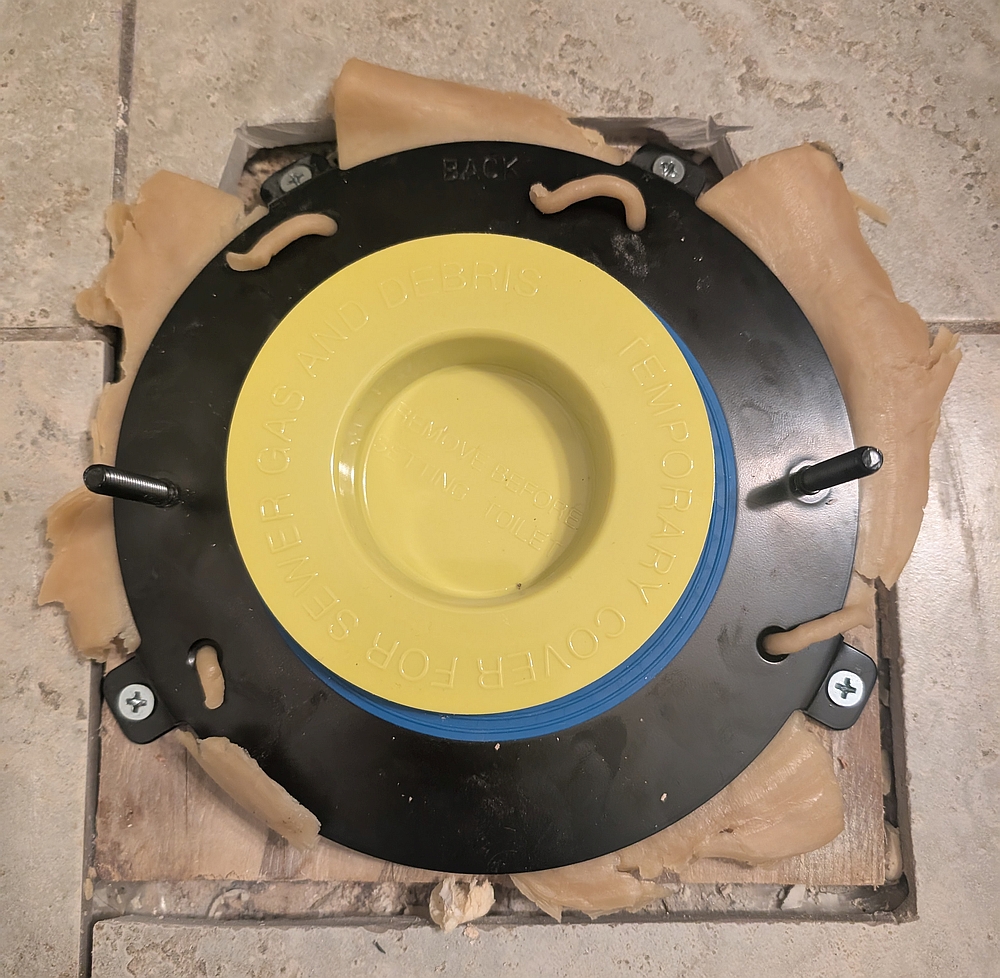
Using the entire ring obviously wasn’t necessary, but since it spread out so much, it was forced into every little crevice of the flange and the space between the gasket and the flange. Which is great: whatever is filled with wax can’t have water in it. I then cleaned off the excess with a putty knife.
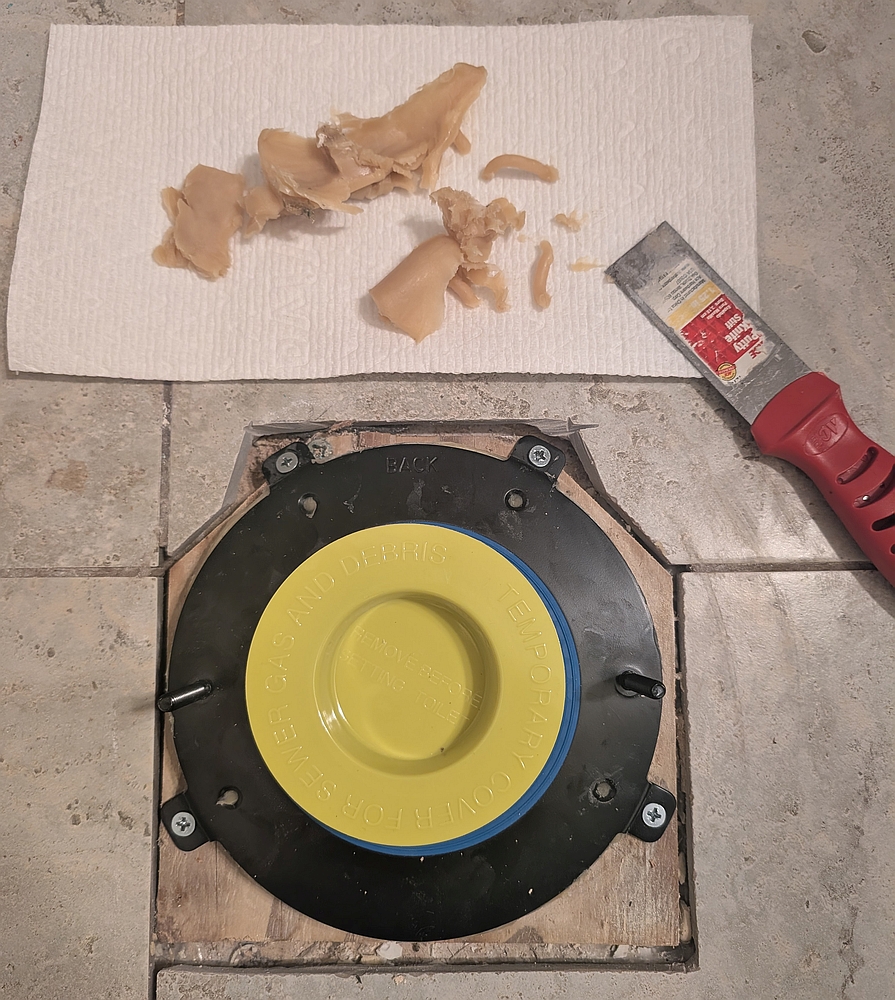
To prep for toilet installation, I put a second wax ring on top of the platform. The instructions said it may not be necessary since the gasket is designed to fit snugly with the toilet outlet, but wax rings were only about $5, and it was one more layer of protection against leaks.
It looks like there’s wood under the four holes toward center from the attachment legs, but it’s wax.
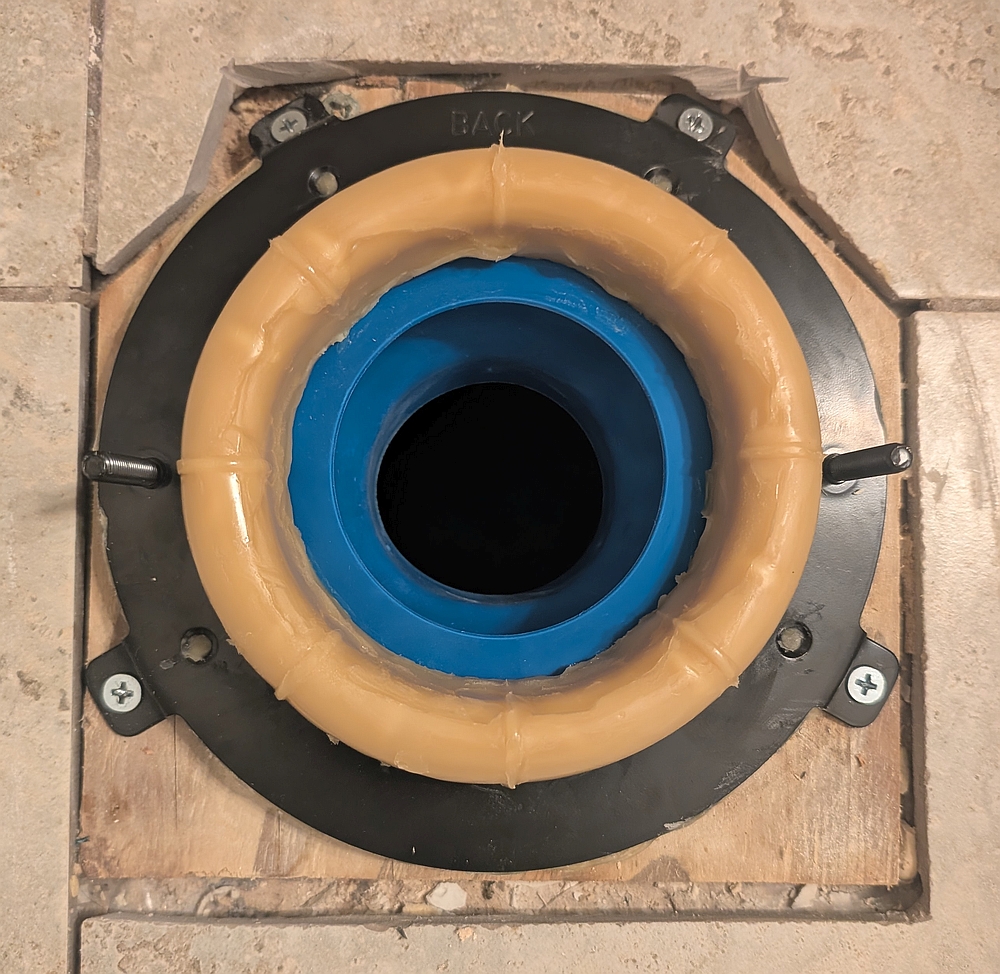
The gasket is a single piece of thick rubber that connects to the toilet outlet and extends nearly an inch below the level of the flange ring. So even if the seal I created by the first wax ring (between the flange and platform) somehow has a gap, no liquid should be touching it directly anyway.
The two bolts on the left and right are what attach the toilet to the platform, and they’re welded on. The platform itself is then attached to the floor by four 1.5″ wood screws. Seems a lot more stable to me than two bolts slotted into a plastic flange ring, even one reinforced by a metal ring.
Same as the first wax ring, the second one spread out a lot. Some of it even came out the sides of the toilet base. Again, fine with me since every crevice filled with wax is one where water can’t go.
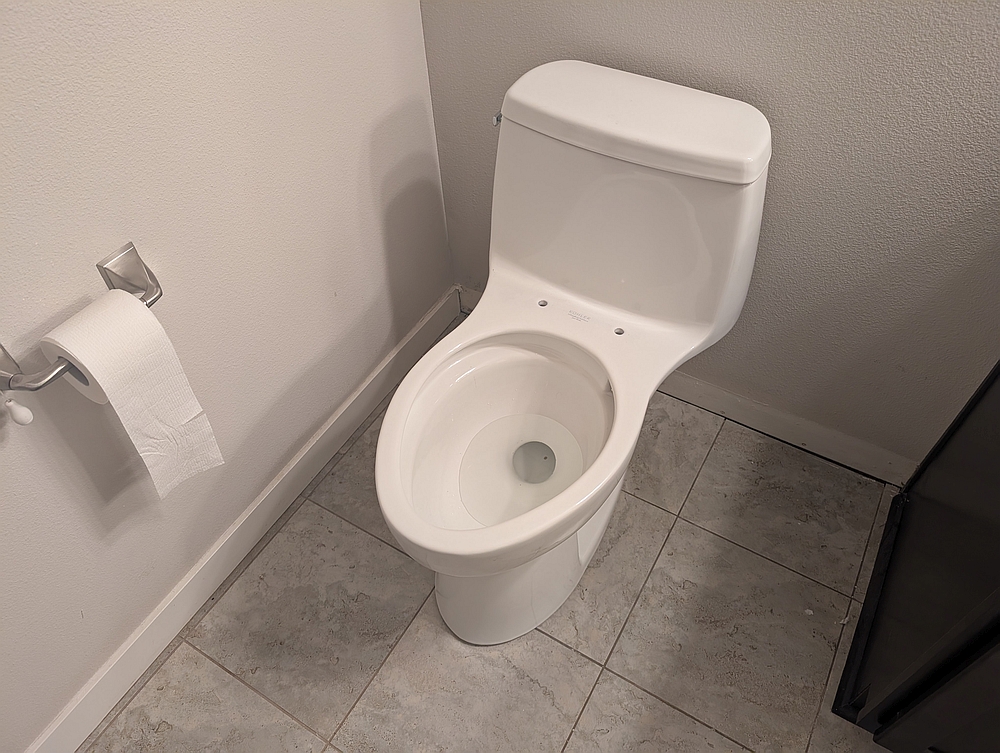
Per code, I then sealed the front and side gaps between the toilet and floor using plumber’s caulk.
I was very intimidated by this project, but I’m glad I ended up doing it (with advice/assistance from friends and YouTube). The only actual obstacle I encountered was the tile cutout being a little too small, but that was a pretty easy fix.
I thought the process was simple enough and the result enough of an improvement that I replaced the last 2-piece toilet in my house a couple months later using another HydroSeat kit. Similar to this install, I had to get a little creative with one of the platform mounting legs, but I was again able to sink all screws into the subfloor.
If you ever need to install a toilet (due to flange failure or just doing a refresh), the HydroSeat seems like a solid choice to me.
 Evening Latte
Leave a comment